Container management software has become a central building block of modern logistics. Instead of relying on isolated tools and spreadsheets, terminals and depots can use one platform to plan, execute, and monitor container operations. The result is fewer manual steps, better visibility across the yard and quay, and faster reactions when something in the schedule changes.
In practice, this type of solution brings together several components: terminal management, logistics coordination, and detailed container tracking. By combining these into a single environment, operators gain a clear view of container flows, cargo handling, and resource usage. That integrated approach turns day-to-day terminal work into a more predictable, measurable process.
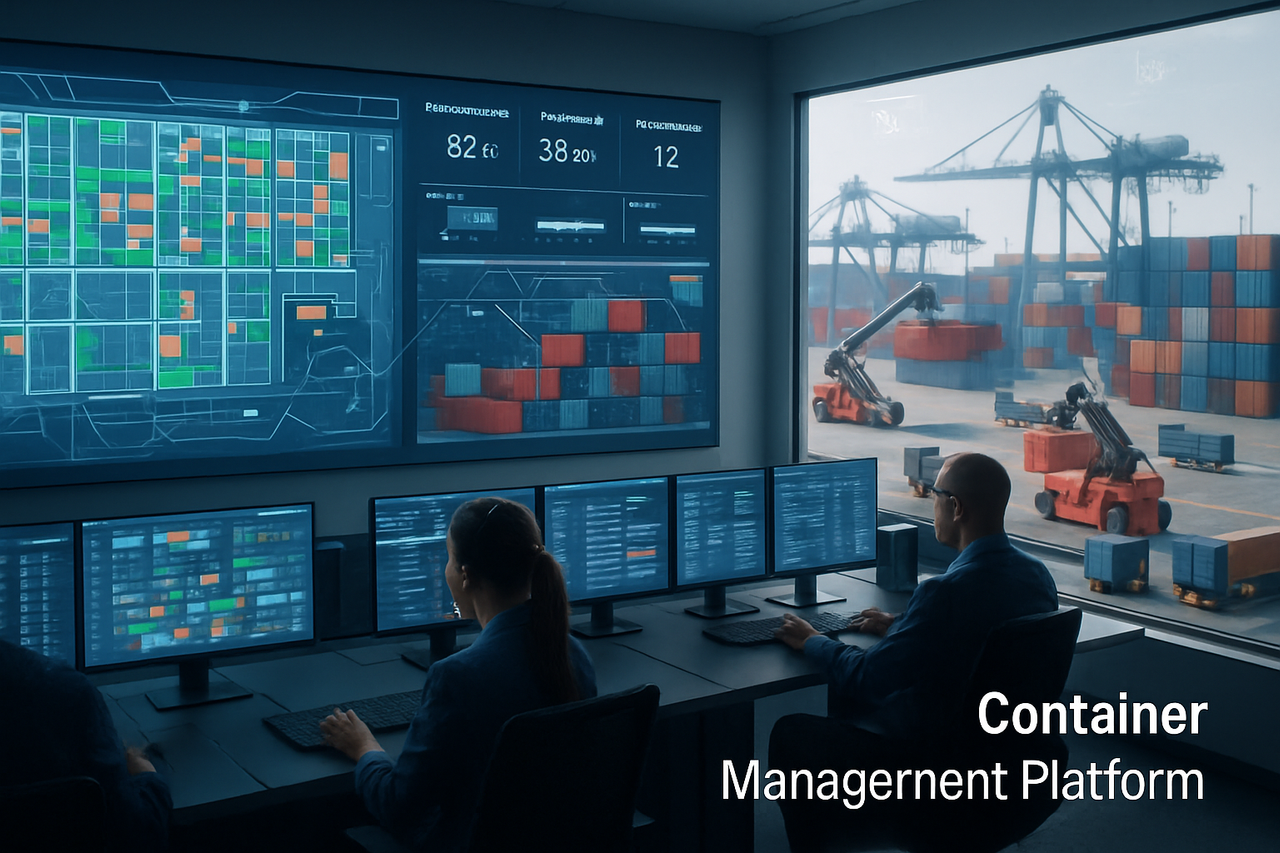
A standout capability of container management platforms is real-time monitoring. Dispatchers and planners can see where containers are, which moves are in progress, and how gates and yard blocks are performing. Technologies such as RFID, GPS, and automated status events feed live data into the system, so decisions are made based on what is happening now rather than on yesterday’s reports.
Cargo handling is supported by dedicated modules for crane, yard equipment, and truck coordination. Moves are assigned in a structured way, safety rules can be built into workflows, and repetitive tasks are automated wherever possible. This reduces the risk of manual errors and cuts down on unnecessary rehandles, which directly improves throughput and equipment utilization.
Granular container tracking is another key element. Each box has a clear digital history: gate events, yard locations, inspections, special instructions, and release status. This level of detail is crucial for keeping time-sensitive cargo on schedule, managing priorities for different customers, and resolving disputes when they arise.
Terminal-focused functionality ties all these elements together. Gate operations, yard planning, vessel working, and rail operations can all be coordinated inside one application. When the same system drives pre-advice, stack strategies, and loading plans, terminals can shorten turnaround times and maintain a more stable operating rhythm.
For a deeper look at how this works in a live environment, you can explore this container terminal operating system.
Rolling out container management software is not just an IT project – it is an operational change. A successful implementation starts with a clear view of existing processes and interfaces, followed by a realistic plan for integrating the new platform into terminal infrastructure.
Integration tools connect the system to existing applications such as ERP, TMS, WMS, and external portals. Real-time data exchange ensures that gate events, storage charges, and service levels are reflected consistently across all systems, reducing double entry and conflicting information.
Data consolidation is equally important. When information from gates, yard equipment, vessel operations, and finance flows into one database, operators gain a complete picture of terminal performance. This supports better planning, easier reporting, and more accurate KPI tracking across departments.
Predictive maintenance modules can further strengthen the setup. By analyzing equipment usage patterns and sensor data, the system can suggest maintenance windows before breakdowns occur. Planned downtime is easier to manage than unexpected failures, helping terminals keep operations stable during busy periods.
Resource planning tools complete the picture. They help allocate people, machines, and yard space based on current demand and upcoming tasks, instead of relying on static rosters and manual estimates. With live dashboards and forecasts, supervisors can move resources to where they bring the most impact.
Despite the clear benefits, adopting container management software brings a few challenges. The initial investment in licenses, integration, and training is often significant, so it is important to link the project to specific operational goals such as faster vessel turns, lower truck waiting times, or reduced rehandles.
Change management is another critical factor. Processes need to be aligned with the new system, and staff must feel comfortable using it in real situations. Clear documentation, role-based training, and realistic pilot phases help teams build confidence before the platform becomes the primary tool for daily work.
Optimization modules can support this journey. By continuously analyzing performance data, the software identifies patterns such as recurring bottlenecks, underused yard areas, or equipment with frequent idle time. With that insight, terminals can refine stack strategies, adjust shift plans, and update operating rules step by step.
Security functions in port and terminal software add another layer of control. Access rights, digital IDs, automated barriers, and integrated video surveillance ensure that only authorized people and vehicles enter sensitive zones. Combined with operational data, this creates a traceable, auditable record of what happens on the terminal, when, and under whose responsibility.
Bulk Liquid/Pressurised Gas Driverwho carries liquids/pressurised gases in specially designed trailers (tankers), usually for chemical companies or mining organisations. Drivers need to be aware of safety issues regarding loading, unloading, handling, separation of dangerous goods and emergency response. Drivers must also comply with the Australian Institute of Petroleum's code of practice.
Car Carrier Driverwho transports vehicles between the ports and holding depots or car dealerships in the metropolitan area. They may also carry out long-distance transport of vehicles interstate. Car carrier drivers may be required to work long shifts.
Cash in Transit Operatorwho drives armoured vehicles carrying cash and other valuables. They provide surveillance, manually handle cash, operate ATM combinations and service ATMs. They operate vehicle security and emergency communication devices, control access to the vehicle and handle firearms and other personal protection devices. Cash in transit operators usually require a security guard licence, a firearms licence and a first aid certificate.
Concrete Agitator Operatorwho transports concrete between cement plants and building sites, using specially designed vehicles which agitate the concrete to prevent it from setting.
Dangerous Goods/Explosives Driverwho carries dangerous goods and/or explosives, usually for chemical companies or mining organisations. Drivers need to be aware of safety issues regarding loading, unloading, handling, separation of dangerous goods and emergency response.
Heavy Haulage Driverwho transports oversized loads such as transportable houses or machinery using specially designed trailers. Some oversized loads are required to be accompanied by a pilot vehicle operator. Heavy haulage drivers may be required to drive to remote locations and spend extended periods away from home.
Heavy Truck Driverwho drives heavy trucks, requiring a special licence, to transport bulky goods or materials. They may in turn specialise as livestock transporters, log haulers, multi-combination drivers and tanker drivers. Heavy truck drivers usually deliver goods to the country or interstate, and may be required to drive for long periods of time over long distances.
Livestock Transport Driverwho transports livestock, usually sheep or cattle, between farms and abattoirs or ports for export. They usually work long hours, which often involves extended periods of physical activity outdoors while loading and unloading stock. They may be required to drive in remote rural areas and on unsealed roads.
Logging Truck Driverwho carries unprocessed timber between plantations and timber mills. Trucks/trailers are usually fitted with a log loading device, which requires a licence to operate.
Pilot Vehicle Operatorwho accompanies trucks carrying oversized loads above the length or width regulated by the transport department. The load movement may be within the metropolitan area, within the state or interstate. Pilots warn other road users that an oversized load is ahead or oncoming and when required clear the way for the oversized load, or prevent other road users from overtaking or interfering with the cargo. Pilots in some states and territories may also have the power to direct traffic.
Refrigerated Goods Driverwho transports refrigerated goods in specially designed vehicles or trailers which are heavily insulated or fitted with refrigeration equipment. Drivers will be required to service the refrigeration equipment and check the temperature of the refrigerated areas at regular intervals. Drivers must also adhere to health and food hygiene regulations.
Tip Truck Operatorwho transports bulk solid materials to and from building sites and/or mine sites. Tip truck operators are usually required to work off-road, sometimes in remote locations.
Tow Truck Driverwho removes broken down or crashed cars and trucks from the roadway. Tow truck drivers may be called out at all hours of the night and in bad weather. Tow truck drivers require a police clearance.
Daily current diesel fuel prices and discounts at all major truck stop locations
Freight Broker credit score search. Invoice matched with Freight Factoring companies.
Calculate dead head miles and total miles of trips.
Live weather forcast from pickup location.
Calculate dead head miles between trips.
After you post your Open Truck Open Load Online.